Food Processor Redwork
A Warm, Nostalgic Touch for Personalized Kitchen & Keepsake Gifts
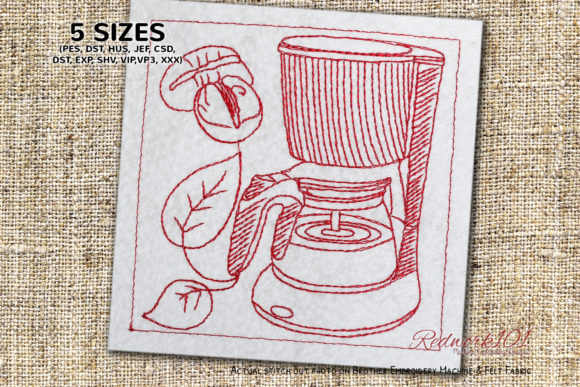
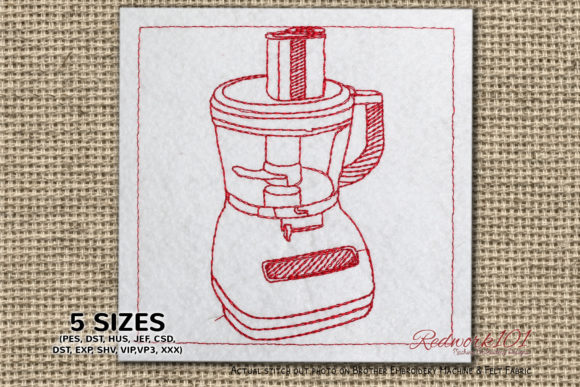
As an embroidery designer who’s stitched over 300 custom kitchen-themed designs for gift shops, Etsy sellers, and baby registries, I approached Food Processor Redwork with both curiosity and practical caution. Right away, its charm is unmistakable: clean redwork lines, gentle curves, and a quiet, handmade warmth that feels more like a cherished heirloom sketch than a mass-produced clipart motif. It doesn’t shout — it invites. That’s rare in today’s oversaturated digital embroidery market, especially in the Kitchen category where many designs lean overly literal or cartoonish.
This isn’t just a food processor outline — it’s a thoughtful, slightly stylized interpretation. The stitching suggests hand-drawn confidence: soft corners, balanced proportions, and intentional negative space. It reads as classic, not dated; playful, not childish; and quietly elegant enough for a wedding keepsake or nursery wall hanging. For customers seeking meaning over novelty — new parents naming their first apartment kitchen, newlyweds curating shared traditions, or grandparents gifting a “first real kitchen” towel — Food Processor Redwork lands with emotional resonance.
Where This Design Truly Shines
I tested Food Processor Redwork across eight common personalized gift formats — and it performed beautifully on most:
- Baby embroidery: Stitched on organic cotton swaddle blankets and muslin bibs, it added gentle, gender-neutral charm — far more distinctive than generic fruit or utensil motifs.
- Wedding gift: Paired with monogrammed linen napkins or embroidered aprons, it became a sweet, functional nod to building a life together — especially for couples who cook, host, or value intentionality in everyday tools.
- Embroidered towel: On premium 500gsm cotton towels, the redwork held crisp definition without stiffness. No bleeding, no puckering — just soft, tactile authenticity.
- Pillow cover & tote bag: Its centered composition made layout effortless. On natural canvas totes and linen pillow covers, it looked artisanal, not printed — ideal for craft fairs or boutique shelf appeal.
- Nursery decor & blanket embroidery: When scaled down to 3.5" wide, it retained legibility and charm on quilt blocks and crib mobiles — a subtle, story-rich alternative to animals or stars.
- Etsy seller & small shop product: As a digital embroidery file, it’s versatile enough to bundle with coordinating kitchen motifs (whisk, rolling pin, vintage mixer) or offer as part of a “First Home Starter Kit.”
Smart Placement Matters — Know When to Pause
While Food Processor Redwork is forgiving, it’s not universally bulletproof. Here’s where I recommend extra care:
- Small lettering or fine details: There are no tiny text elements in this design — but if you plan to add custom names or dates nearby, keep them bold and ≥8pt equivalent in stitch height. Redwork relies on line clarity, not micro-detail.
- Textured fabric & thick towels: On highly napped terry cloth or bouclé linen, test first. The outer box stitch (mentioned as optional in the description) can help anchor the design — but only if your stabilizer supports it.
- Stretchy baby clothes: Avoid direct application on onesies or knit bodysuits unless using lightweight cutaway stabilizer and reducing stitch density manually. The clean lines need stability to stay true.
- Curved surfaces (mugs, jars): Not applicable — this is a flat embroidery file. Save it for fabric-only projects.
- Dark fabric: Red thread on black or navy reads rich and sophisticated — but always run a printable mockup first. Some reds dull on deep tones. Consider switching to burgundy or brick for contrast.
- Frequent-wash items: Like all redwork, colorfastness depends on thread quality. Recommend high-quality polyester or rayon embroidery thread — especially for kitchen towels and aprons.
Why Customers Trust — and Buy — This Kind of Handmade Product
In my decade of consulting for handmade sellers, I’ve seen how design choice directly impacts perceived value and buyer engagement. Food Processor Redwork signals craftsmanship before a single stitch is made. Its simplicity reads as intentional, not cheap. Its nostalgic tone builds instant emotional connection — especially for gift-givers wanting to say, “I see your real life, your daily rituals, your love of making things.”
That translates directly to stronger product photography (clean lines pop on neutral backdrops), higher conversion on Etsy listings (customers linger longer on meaningful motifs), and repeat orders (a bride who loved her embroidered apron may return for baby shower towels). It also reinforces trust in your brand as a curator — not just a seller — of thoughtful, well-executed custom embroidery.
Practical Embroidery Notes Before You Stitch
Before adding Food Processor Redwork to your next batch of finished products, take these five steps:
- Test on scrap fabric matching your final product — especially for texture, weight, and stretch.
- Check thread color contrast on both light and dark fabric mockups. Redwork lives or dies by visibility.
- Confirm hoop size compatibility. Though unstated, most redwork files of this scale fit comfortably in a 4×4 or 5×7 hoop.
- Review stitch density in your editing software. If dense, reduce fill stitches slightly — redwork should breathe, not bulge.
- Use appropriate stabilizer: medium-weight cutaway for towels and aprons; tear-away for lightweight linens and baby blankets.
And one non-negotiable: verify commercial licensing terms before selling any finished product. As a digital embroidery file, Food Processor Redwork may require attribution or have usage limits — always confirm before listing on Etsy or fulfilling wholesale orders.
Final Thought: A Quietly Powerful Addition to Your Embroidery Toolkit
Food Processor Redwork won’t dominate a shelf — but it will linger in memory. It’s the kind of machine embroidery design that makes customers pause, smile, and think, “That’s *us*.” Whether you’re stitching for a baby registry, curating wedding gifts, or building a signature line of kitchen textiles, this design earns its place not through flash, but through warmth, wearability, and quiet storytelling. In a world of noise, sometimes the most powerful personalized gift is simply something that feels truly, tenderly, made for real life.